Choosing the right soup pot is essential for home cooking. The material directly affects cooking results, food safety and daily health. When shopping for a soup pot, you need to comprehensively consider material, thermal conductivity, durability and ease of cleaning. This guide introduces the pros and cons of common soup pot materials and shares practical tips for making the right purchase.
1. Common Soup Pot Materials: Pros and Cons
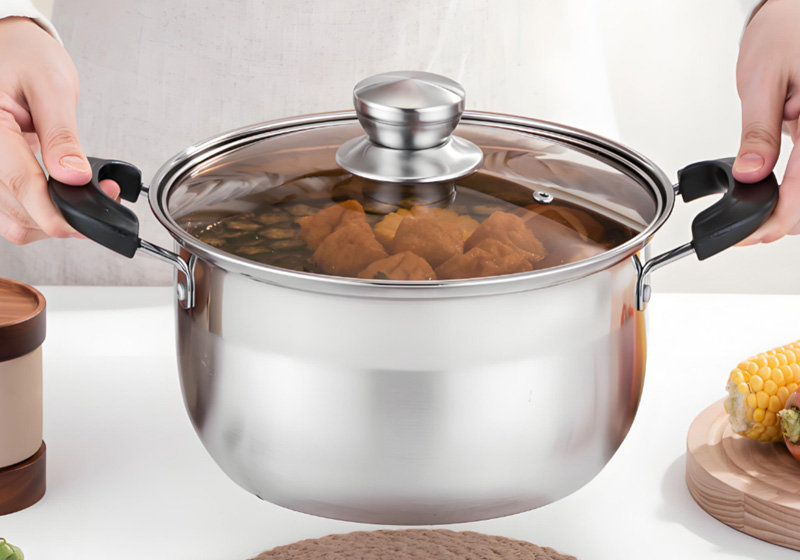
1. Stainless Steel Soup Pot
Pros
● Highly durable, not easy to deform or damage.
● Premium grades such as 304 stainless steel offer strong corrosion resistance and rustproof performance.
● Smooth surface resists stains and is effortless to clean.
● Reacts minimally with food, leaving original flavors untouched with no odd odors.
Cons
Average thermal conductivity; most stainless steel pots feature aluminum or copper encapsulated layers to improve heat distribution.
High-quality stainless steel soup pots come at a relatively higher price.
2. Cast Iron Soup Pot
Pros
● Excellent heat retention and even heating, perfect for long-time simmering and stewing.
● Extremely sturdy and long-lasting, keeping its shape for years.
● Properly seasoned cast iron develops a natural non-stick surface.
Cons
● Heavy in weight, inconvenient to move and handle.
● Requires regular maintenance like oil seasoning to prevent rusting.
● Slow heat-up, not ideal for fast cooking.
3. Aluminum Alloy Soup Pot
Pros
● Outstanding thermal conductivity, heating food quickly and evenly.
● Lightweight and easy to handle in daily use.
● Affordable and budget-friendly.
Cons
● Soft material prone to deformation.
● Uncoated aluminum may release harmful substances at high temperatures; most alloy pots adopt non-stick coating for safety.
4. Copper Soup Pot
Pros
● Top-tier thermal conductivity among common metals, delivering ultra-fast and uniform heating.
● Elegant metallic luster creates a premium decorative look.
Cons
● Very expensive.
● Prone to oxidation and requires special regular maintenance.
● May react with acidic food, so inner walls are usually lined with stainless steel or tin.
5. Ceramic Soup Pot
Pros
● Natural and eco-friendly, releasing no harmful substances.
● Great heat retention, ideal for slow simmering.
● Rich colors and delicate patterns offer beautiful decorative value.
Cons
● Brittle material, easy to crack or break.
● Inferior thermal conductivity compared with metal cookware.
2. How to Choose a Soup Pot
1. Choose According to Cooking Habits
● Long simmering: Go for cast iron or ceramic pots with excellent heat retention.
● Fast cooking: Pick aluminum alloy or copper pots with fast heat conduction.
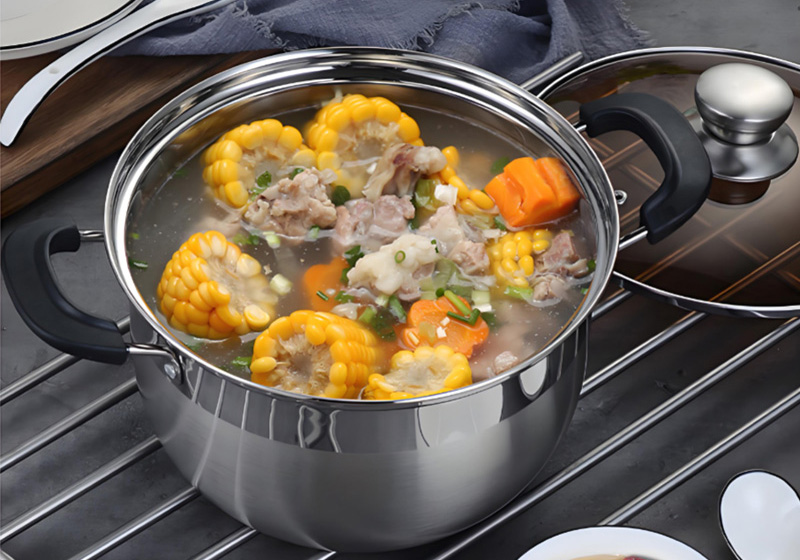
● Daily household use: Stainless steel is the all-round choice with balanced performance and easy cleaning.
2. Select the Right Capacity
Match the capacity to your family size and dining habits.
A 4–6L pot suits families of 3–4 people; 8–10L is perfect for large families or entertaining guests.
3. Check the Pot Bottom Design
High-quality soup pots adopt multi-layer encapsulated bottoms, such as stainless steel-aluminum-stainless steel structure, for better heat conduction, stable heating and avoiding local overheating.
4. Check Lid Sealing Performance
A well-fitted lid locks heat and moisture to improve stewing results. Lids with silicone sealing rings provide better airtight performance.
5. Consider Ease of Cleaning
Opt for smooth, stain-resistant materials like stainless steel or coated aluminum alloy for effortless daily cleaning. Avoid rough surfaces that require special cleaners.
6. Focus on Brand and After-sales Service
Reputable brands guarantee reliable quality and complete after-sales support. Always check user reviews and brand reputation before buying.
3. Maintenance & Usage Tips
Proper use and maintenance extend the service life and keep your soup pot in optimal condition.
Correct Usage
● Preheat the pot before use to reduce food sticking.
● Avoid empty dry burning, which damages the pot bottom and shortens lifespan.
● Use proper heat according to the pot material to prevent deformation and coating damage.
Correct Cleaning
● Clean promptly after use; do not leave food residue inside for a long time.
● Use mild detergent and soft cleaning tools; avoid metal scrubbers or strong acid and alkali cleaners.
● Do not soak cast iron and copper pots in water for too long to prevent rust and oxidation.
Regular Maintenance
● Season cast iron pots with edible oil regularly to prevent rust.
● Clean and polish copper pots with professional copper cleaner to maintain luster.
Choosing a suitable soup pot requires comprehensive consideration of material, thermal conductivity, capacity, bottom design and ease of cleaning. Each material has unique advantages and disadvantages; the best choice depends on your cooking needs and living habits. Proper daily use and maintenance will greatly prolong the pot’s service life, allowing you to cook delicious meals effortlessly every day.