Wok: Material, Craft and Usage Guide
The wok is a commonly used cooking tool in the kitchen. Stainless steel woks have become the preferred choice for many households and businesses due to their durability, easy cleaning and corrosion resistance. Especially for customized gifts, stainless steel woks are popular as client gifts and employee presents for their practicality and elegant appearance. These woks are usually made of high-quality stainless steel with special processing, ensuring stable performance on gas stoves and meeting daily stir-frying needs.
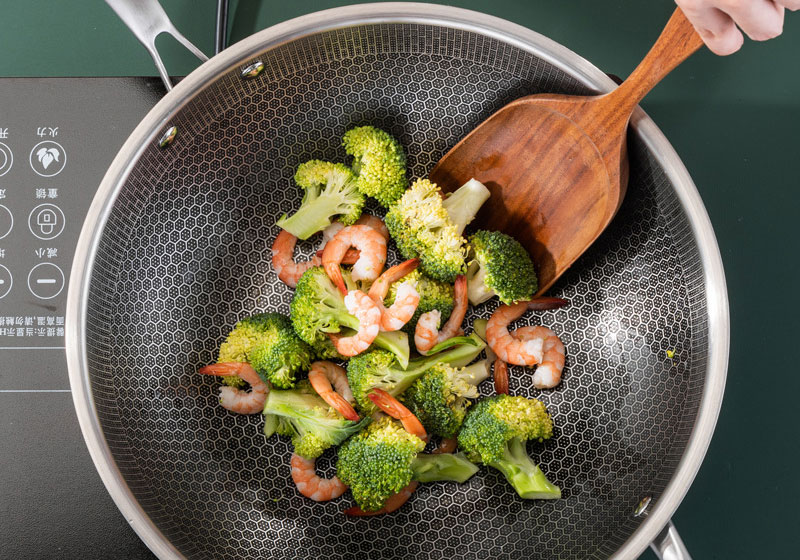
Material & Craft: What Makes Stainless Steel Durable
The core material of stainless steel woks is food-grade stainless steel, mainly composed of iron, chromium and nickel. Chromium forms a dense oxide film on the surface, blocking oxygen and moisture from the metal base to prevent rust. Nickel improves toughness and corrosion resistance. Some high-end models adopt a multi-layer composite structure: magnetic stainless steel outer layer (for induction cookers), aluminum or copper middle layer (for even heat conduction), and food-grade stainless steel inner layer (food contact). This design balances practicality and safety.
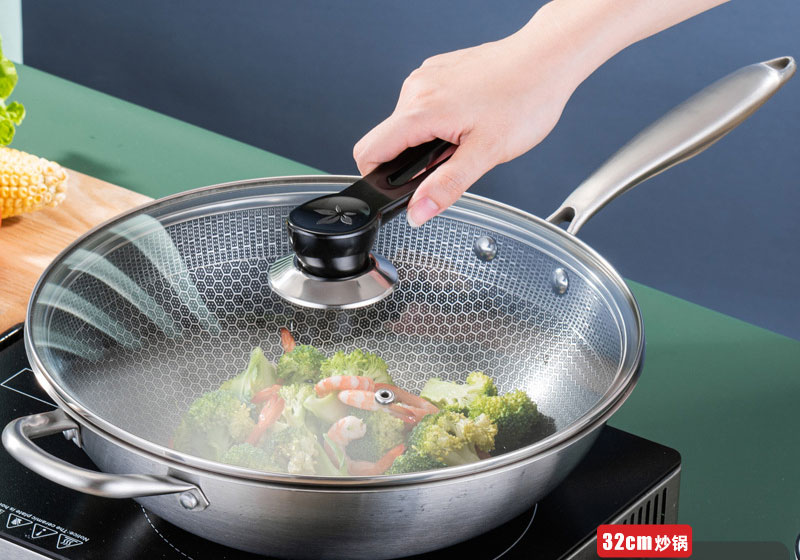
Usage: Maximize Your Wok’s Performance
When using a stainless steel wok, proper preheating and temperature control matter. Direct high heat on a cold wok may cause local overheating. It is recommended to preheat on low to medium heat for 2–3 minutes before turning to high heat for cooking. After cooking acidic foods such as tomatoes or vinegar, clean and dry the wok promptly to avoid surface oxidation from long-term acid contact. Use a soft cloth or sponge with neutral detergent instead of steel wool to prevent scratches. Store it completely dry if unused for a long time to avoid rust in humid environments.
Technical Highlights: Non-Stick & Even Heat Conduction
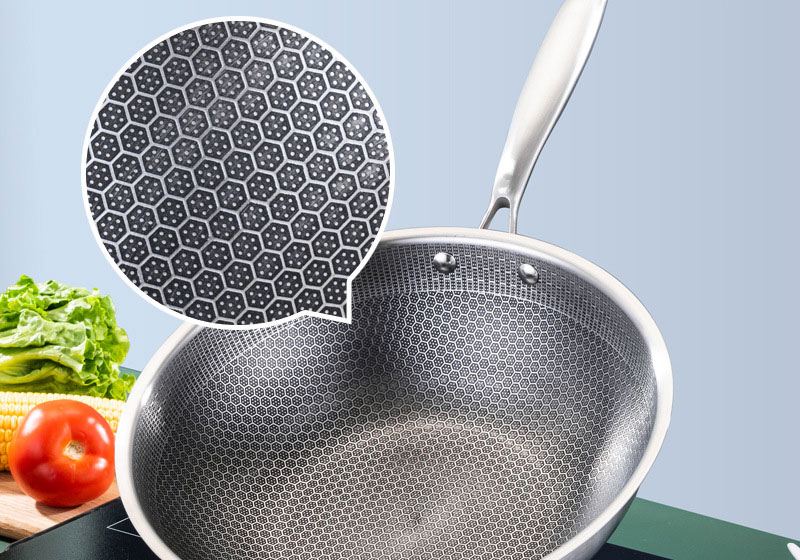
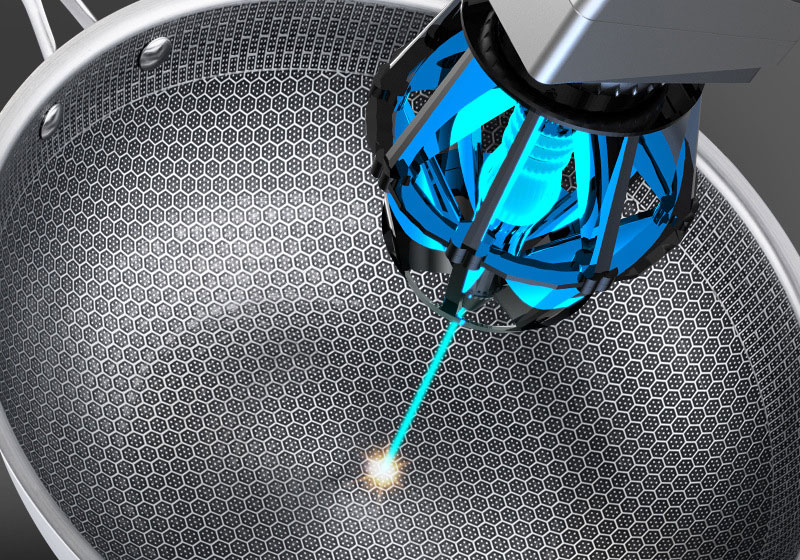
Traditional stainless steel woks tend to stick. Modern designs solve this in two ways: physical non-stick, using hammered or honeycomb textures to reduce contact area between food and the pan; chemical non-stick, with inner non-stick coatings like ceramic coating, though metal spatulas should be avoided to protect the coating. Multi-layer composite structures greatly improve heat distribution, preventing burning from hot spots, making them ideal for delicate cooking such as frying fish and stir-frying meat.