The differences between stir-frying in a large wok and a small wok mainly lie in size, usage scenarios, heat control, operating difficulty, and flavor.
Key Differences
Wok Size & Capacity
● Small wok: Household size, usually 20–26 cm in diameter, ideal for 1–3 people, lightweight and easy to flip.
● Large wok: Commercial or canteen use, often over 1 meter wide, can cook for dozens of people at once, requiring special stoves and long-handled spatulas.
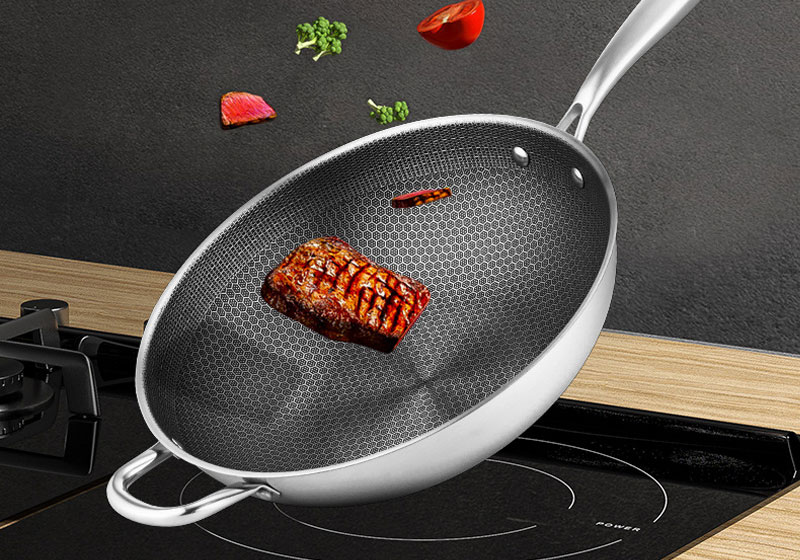
Suitable Scenarios
● Small wok: Perfect for home quick stir-fry, preserving freshness and wok hei (wok breath), especially good for leafy vegetables that cook fast.
● Large wok: Used in canteens, banquets and group meals, great for braised meat dishes such as braised pork, with richer flavor from larger portions.
Heat Distribution & Control
● Small wok: Concentrated and even heat, perfect for high-heat quick stir-fry, better nutrient retention.
● Large wok: Uneven heating, longer cooking time and harder heat control. However, thick wood-fired large woks create a fragrant, smoky, charred flavor.
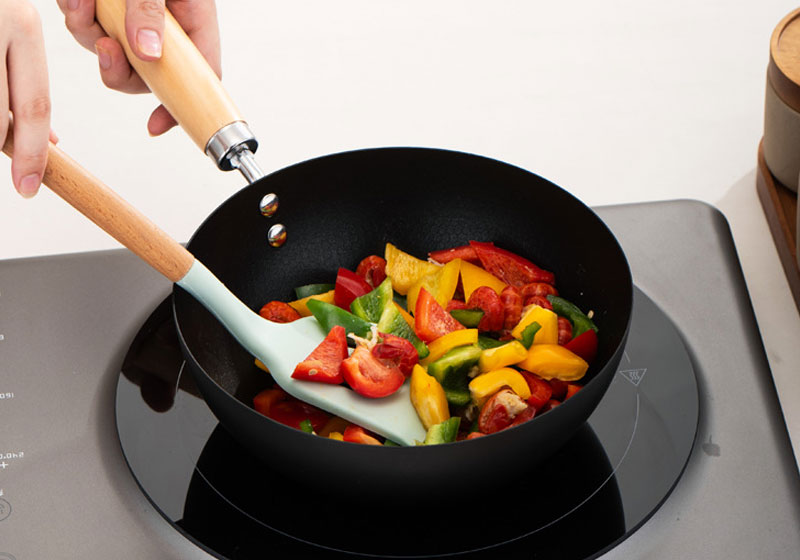
Operation & Skill
● Small wok: Easy to toss with one hand, suitable for delicate cooking, but highly dependent on the cook’s skill.
● Large wok: Requires two hands and experienced heat control; seasonings must be scaled proportionally to avoid excess water.
Flavor Characteristics
● Small-wok dishes: Highlight the natural taste of ingredients, fresh and light.
● Large-wok dishes: Rich meat flavor from long braising and full oil release; wood-fired cooking adds a rustic, smoky taste.
Notes
Many chefs agree that cooking large-wok dishes with small-wok freshness is an advanced skill, relying on high heat and fast cooking.
The traditional saying “rice in large pots, dishes in small woks” reflects common wisdom: large pots ensure fully cooked rice, while small woks keep vegetables tender and flavorful.
In conclusion, neither is inherently better — each has its own strengths depending on the occasion, ingredients and heat source.