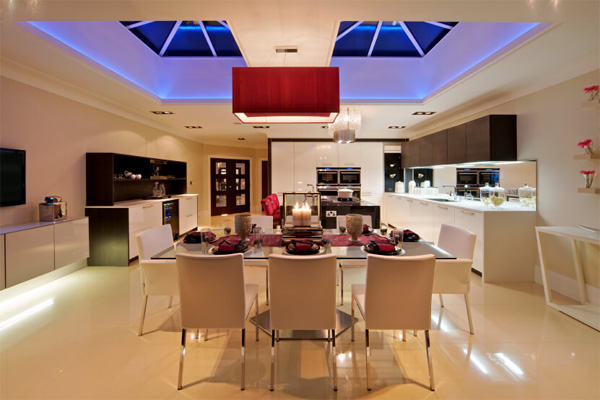
LED lighting for kitchens
If you're remodelling your kitchen, or looking to replace your current lighting, LED lighting will open up your options. LED stands for Light Emitting Diode, and instead of needed to heat a wire filament, it only needs an electrical current to emit light. LED lights are much smaller than bulbs, meaning they can be used in a wider range of applications. This gives you more flexibility in terms of where you can place them and what effects you can use.
LED kitchen lighting is much safer than traditional bulbs. It operates at a lower voltage and emits much less heat than other lighting options. LED light is also more energy efficient, which will reduce your carbon footprint and hopefully your bills too.
In this guide, we have included everything you need to know about LED lighting including where it can be installed, how to keep them safe in the kitchen and how they can be used to enhance your interior design.
Things to consider when installing LED lighting
The first thing to decide is where you want to place your lights. Different products will suit certain areas in the kitchen better than others. Kitchen lighting is commonly placed on the ceiling, underneath a cabinet or on the wall. In a modern kitchen especially, LED strip lights look great under cupboards and cabinets to light the counter tops and backsplash.
However, you will need to make sure that the lights will not be too close to the hob, as this might damage them. LED lights that come into contact with cooking fat or hot oil can be damaged easily, so if they cannot be installed a safe distance away, make sure they are protected.
Another key consideration is the size or length of LED lighting you need to effectively light the space. Kitchen LED strip lights can be cut to size, but it's always best to measure the space and make sure you have more than you need. This will give you a little bit of wiggle room if you make a mistake.
It's important that your kitchen lights are water resistant because of the condensation cooking creates. It also needs an adequate level of resistance if you're placing it near a sink or source of water.
The sealing case on LED strip lights will protect against splashing and steam, but always check the IP rating to see how it will hold up against water and other liquids. Now you can start to think about fun extras like colours and effects. Depending on the look you want to create, if you're using white light, you need to pick a colour temperature.
Warm white will create a relaxed atmosphere and bright white will better suit a modern, stylised kitchen. LED lights can also be ordered in a range of RGB colours. Some have the ability to change colour, providing you opt for RGB or RGBW strips. You can also choose options that are dimmable, allowing you to change the mood as and when.
Keeping your LED lights safe in the kitchen
Keeping your light safe will increase the longevity of any bulb. Positioning and correct installation are the two main factors that will ensure your lights are kept safe. Make sure any lights can cope with condensation and moisture. If you're unsure, you can talk to a professional before you buy. You also should not place kitchen lights near your hob, as the heat and cooking oils can damage the casing and the diode itself.
Another way to keep your lights safe is to clean and maintain them regularly. This is especially important in a small kitchen where oils or fat can easily reach your light fittings. Before you clean LED lights, always make sure they're turned off. This will prevent you from getting any nasty electric shocks while you work. Use a brush for dry dirt and a damp cloth for liquids and grease. Make sure that, if you are using a damp cloth, that is not sopping wet, as this can cause further damage. Always avoid using harsh chemicals as this will damage the lights and potentially cause corrosion.
The benefits of LED lighting
A great perk of LED lighting is the flexibility it gives you in your design. This is particularly true for flex lighting options that can go virtually anywhere. LED lights for kitchen cabinets are an innovative way to light spaces generally shaded by ceiling lights alone. Strip lights are also available with water resistance that can provide you with more choice as to where they can go in the kitchen.
LED lights are more durable than traditional lighting. An LED light can last approximately 50,000 hours, meaning you will not need to replace them as frequently. They're also safer as there is less heat output and UV emissions like with traditional bulbs.
You also have a greater range of effects to play with. Dimmable LED lights can change the atmosphere of the room easily. For example, if you're going from cooking a meal to enjoying a romantic dinner with your partner, strip lights in particular can be used for ambient lighting.